By the Fly Shiny team · Updated July 2026 · 15 years of professional aircraft detailing
Quick answer: To clean a Beechcraft King Air, remove the oil, grease, and hydraulic fluid with Fly Shiny Oil Delete, clean the landing gear, and take the bugs off the flaps with Bug Blitz. Dry wash with Quick Turn, then remove the twin-PT6 exhaust — on the nacelles, the top of the wings, and under the wings on both sides of each nacelle — with Carbon Blitz misted on a damp towel, and neutralize with Quick Turn. Wipe exhaust off at minimum every 10 flight hours, and protect the paint with a ceramic coating — because a riveted airframe like the King Air can only be buffed so many times.
Here's the full process, the twin-engine difference, and the two rules that decide how long your King Air's paint survives.
King Air Cleaning at a Glance
| Contaminant | Product | Where on the King Air | The rule |
|---|---|---|---|
| Oil, grease, hydraulic fluid | Fly Shiny Oil Delete | Belly, gear areas | Non-flammable, paint-safe, won't soften paint |
| Exhaust soot × 2 engines | Fly Shiny Carbon Blitz — misted on a damp towel | Nacelles, wing tops, underwing on both sides of each nacelle | Wipe at minimum every 10 flight hours; always neutralize after |
| Bugs | Fly Shiny Bug Blitz | Leading edges, flap bottoms, windshield | Enzyme-based — attacks the bug, not the aircraft; never let it dry |
| De-ice boots + polished spinners | Fly Shiny Quick Turn ONLY | Wing/tail leading edges, both spinners | No cleaners on boots or polished metal — plus the Concentrate gloss trick below |
| Everything else | Fly Shiny Quick Turn | Entire airframe | Waterless dry wash that lubricates as it cleans and neutralizes cleaner residue |
| Protection | Fly Shiny Pro ceramic coating | Painted surfaces — never the windows | Rivets limit how many times you can buff; protect so you don't have to |
Why Is Cleaning a King Air Different?
Take everything the Pilatus PC-12 throws at you and double the engines. Each PT6 on a King Air paints its own soot trail: across the nacelle itself, over the top of the wing, and under the wing on both sides of the nacelle. Two engines, two trails, four underwing zones — and every flight hour adds to them.
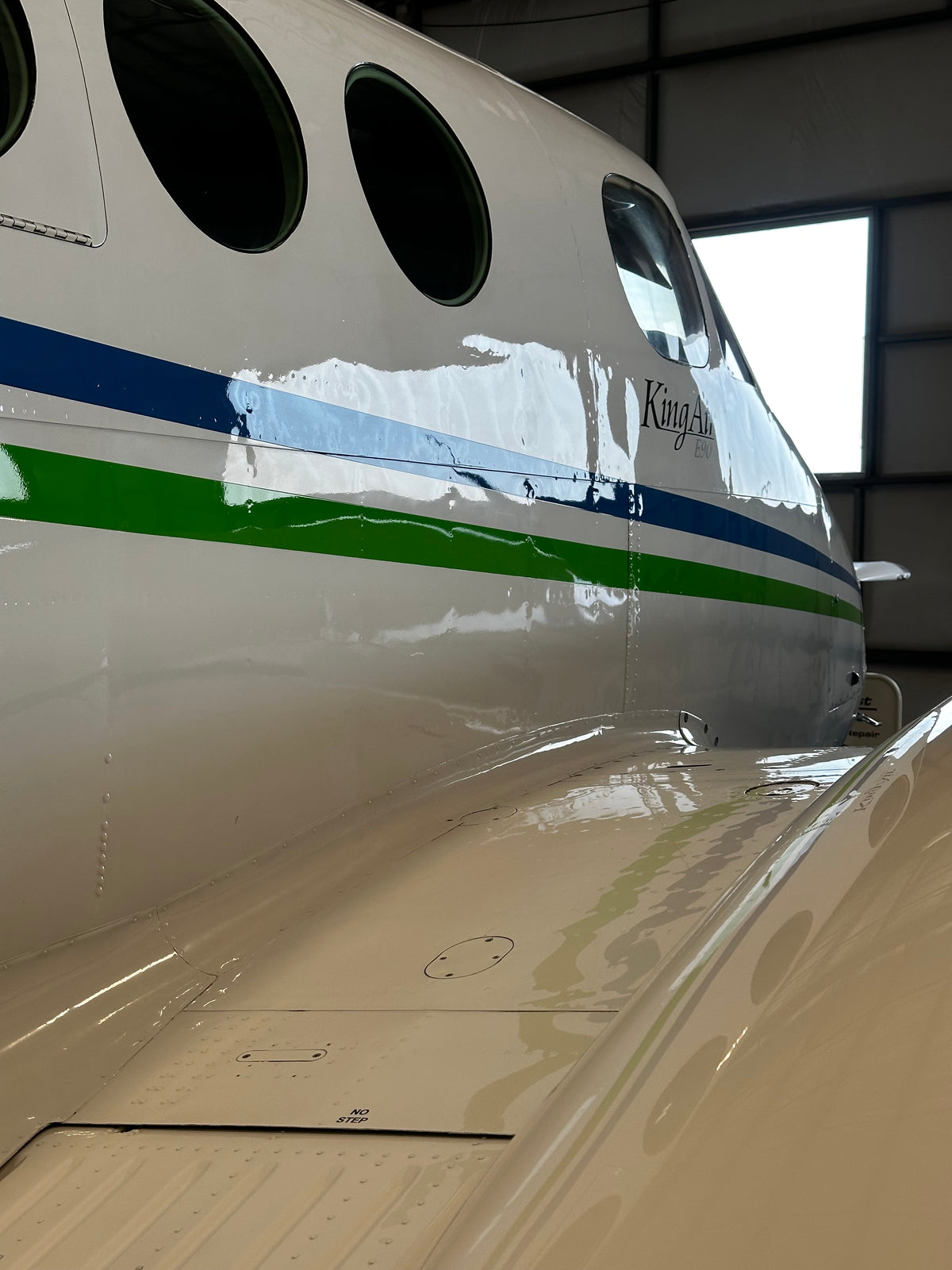
Then there's the airframe itself. The King Air is riveted aluminum, and every compounding or buffing session removes a little paint, with the rivet heads always the first place to burn through. You can only buff a King Air so many times. That single fact should drive your whole strategy: protect the paint aggressively so you never have to restore it.
Same rules as its single-engine cousin otherwise: glass windshields, acrylic side windows, de-ice boots that never touch cleaners, polished spinners, and a pressurized cabin whose windows never get coated.
What Do You Need to Wash a King Air?
- Fly Shiny Oil Delete — oil, grease, and hydraulic fluid
- Fly Shiny Carbon Blitz — both exhaust trails
- Fly Shiny Bug Blitz — bugs on flaps, leading edges, and windshield
- Fly Shiny Quick Turn — the dry wash, boot and spinner cleaner, and neutralizing step
- Fly Shiny Quick Turn Concentrate — the boot gloss trick (below)
- Large twisted-pile drying towels, plus a dedicated window towel
- Disposable cotton terry towels for oil work
- Pitot/static covers; inlet and exhaust covers if you have them
Before You Start
Walkaround first: note existing damage, look for leaks — find one and you stop and tell the owner or mechanic before cleaning erases the evidence. Close the doors, cover the pitot probes and static ports, get your covers on.
How to Dry Wash a King Air, Step by Step
Step 1: Oil, grease, and hydraulic fluid
Oil Delete on a terry towel across the belly and gear areas. Non-flammable, paint-safe, won't soften the paint.
Step 2: The landing gear
Clean the gear legs, doors, and wheels — but never wipe the polished section of the struts. That film of fluid is lubrication from the strut cycling; wipe it dry and you risk damaging the seals and creating a leak. Careful around small sensors and wiring too.
Step 3: Bugs off the flaps
Flap bottoms collect bugs most owners never see. Bug Blitz on the flaps, especially the undersides, and wipe clean.
Step 4: Dry wash the aircraft
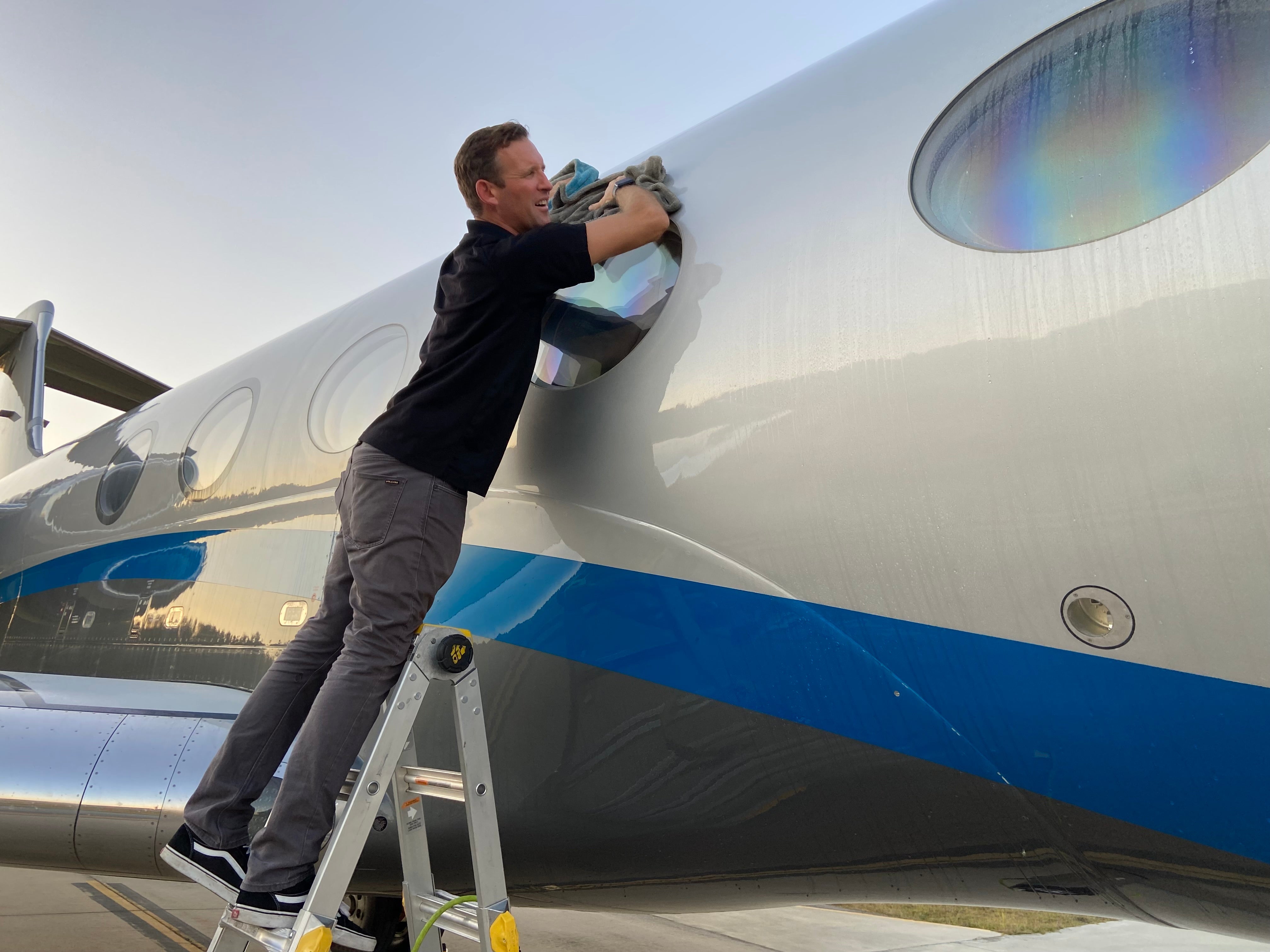
Spray Quick Turn over each section and wipe with a large drying towel. Anywhere there are bugs, spray Quick Turn first, then mist Bug Blitz on top and let it dwell 30 to 60 seconds — the enzymes emulsify the bug remains, not the aircraft, so they wipe off without abrasion.
Never let cleaners dry. Outside in sun or wind, reapply Quick Turn or more Bug Blitz to keep the surface wet until you wipe.
Step 5: Both exhaust trails — nacelles, wing tops, underwing
The twin-engine job. Take your dampest dry wash towel and mist Carbon Blitz onto the towel — not the aircraft. Work each engine's trail: the nacelle itself, the top of the wing behind it, and under the wing on both sides of the nacelle. The damp towel plus Carbon Blitz emulsifies the soot and lifts it without the cleaner sitting on the paint. No hydrogen embrittlement, no corrosion, no etching.
Then neutralize every exhaust area with Quick Turn. No cleaner residue gets left behind — residue promotes corrosion.
Step 6: The Quick-Turn-only zones — boots, spinners, windows
De-ice boots: Quick Turn only. No cleaners — not Bug Blitz, not Carbon Blitz, nothing. Cleaners damage the boot coating.
Polished spinners: both of them get Quick Turn only. Anything stronger risks the finish.
Windows: the glass windshields take Bug Blitz for bugs just fine — never let it dry. The acrylic side windows get Quick Turn; exhaust film builds on them over time. Finish all windows with a clean, dedicated window towel in the direction of airflow.
The boot gloss trick: want the boots deep black and glossy after cleaning? Put Quick Turn Concentrate — straight, undiluted — on a towel, wipe it onto the de-ice boots, then wipe dry with a clean, dry microfiber towel. It keeps the boots looking fresh on top of whatever boot sealant you maintain them with.
Final quality-control walkaround, pull the covers, done.
The 10-Flight-Hour Rule
Here's the number every King Air operator should live by: exhaust gets wiped off the aircraft at minimum every 10 flight hours.
PT6 exhaust is corrosive, and it doesn't stop working just because you stopped flying. Left sitting, it degrades whatever it's touching — including a ceramic coating. A coating is a sacrificial barrier: it takes the hit so your paint doesn't. But let corrosive exhaust sit on it indefinitely and it will eat through the coating and get into your paint. A ceramic coating buys you easier cleaning and real protection — it does not buy you permission to ignore the soot.
Between full washes, a quick Quick Turn wipe-down of both exhaust trails takes minutes and saves paint.
Protecting a King Air: Ceramic, Because Buffing Is a Budget
Remember the rivets. Every buffing session removes paint, and King Air paint over thousands of rivet heads has no margin for repeated restoration. If the paint does oxidize, the oxidation has to come off before any protection goes on — but the winning strategy is to never let it get there.
That's why our preferred protection for King Airs is the Fly Shiny Pro ceramic coating. It lasts far longer than wax or spray sealants, it stands up to the twin exhaust trails far better, and once the aircraft is coated, routine exhaust comes off with just Quick Turn — no aggressive chemicals grinding away at your paint's finite lifespan, wash after wash, year after year.
The window rule — no exceptions: the King Air is pressurized, and no coating goes on any window. Not ceramic, not spray ceramic, not wax on the glass windshields. Windows get cleaned — Quick Turn, Bug Blitz for bugs — and that's it.
King Air Cleaning FAQ
Where does exhaust collect on a King Air?
Each PT6 stains its own nacelle, the top of the wing behind it, and the underside of the wing on both sides of the nacelle. Two engines means two full trails to clean every wash.
How often should exhaust be wiped off a King Air?
At minimum every 10 flight hours. PT6 exhaust is corrosive and keeps degrading whatever it sits on — including ceramic coatings.
If I have a ceramic coating, can I leave the exhaust on longer?
No. A ceramic coating is a sacrificial barrier — it protects your paint by taking the damage itself. Leave corrosive exhaust sitting and it will eventually degrade the coating and reach your paint. Wipe it regularly; with a coating, Quick Turn alone does the job.
Why shouldn't I just buff my King Air when it gets dull?
Every buff removes paint, and the rivet heads burn through first. A King Air can only be buffed so many times in its paint's life — protecting the paint with a ceramic coating so you never need aggressive restoration is the far cheaper path.
How do I keep de-ice boots glossy?
After cleaning them with Quick Turn, wipe undiluted Quick Turn Concentrate on with a towel, then buff dry with a clean microfiber towel. It keeps the boots dark and glossy on top of your boot sealant.
Can I ceramic coat the windows?
No. The King Air is pressurized — no ceramic, spray ceramic, or wax on any window, glass or acrylic. Windows get cleaned only.
Can I use cleaners on the de-ice boots?
No. Boots get Quick Turn only. Cleaners damage the boot coating, and boots are expensive.
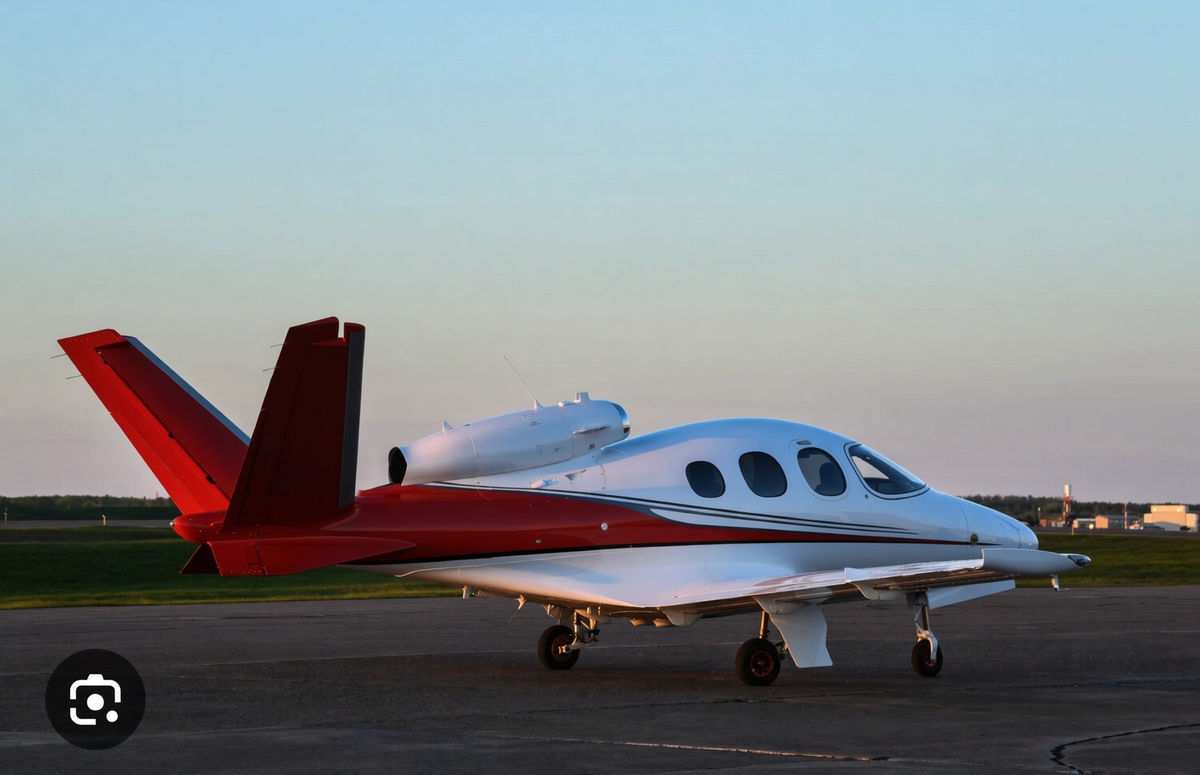
About Fly Shiny: Fly Shiny makes aviation-grade detailing chemicals formulated from 15 years of professional aircraft detailing experience, from piston singles to turboprops and jets. Every product in this guide is available at flyshiny.com. More in this series: Cirrus SR22, Cirrus Vision Jet, and Pilatus PC-12. Next: Robinson helicopters.

Leave a comment
This site is protected by hCaptcha and the hCaptcha Privacy Policy and Terms of Service apply.